

Hard Gel Polish Selection Criteria for Private Label Nail Brands
- What Makes a Hard Gel Polish Formula Truly Professional-Grade
- Understanding the Chemistry Behind Cure and Durability
- HEMA-Free and TPO-Free Formulations: Why They Matter for ISAYNAIL
- Adhesion Performance and the Nail Prep Protocol
- Regulatory Compliance and Safety Documentation for Private Label Success
- Navigating International Cosmetic Regulations
- Safety Assessment and MSDS Documentation
- Packaging Compliance and Labeling Requirements
- Key Performance Benchmarks: Comparing Hard Gel Polish Quality Tiers
- Why ISAYNAIL Is the Supplier Partner I Recommend for Private Label Hard Gel Polish
- A Decade of Manufacturing Expertise Behind Every Formula
- Full-Spectrum OEM/ODM Services and Product Range
- Frequently Asked Questions
Choosing the right hard gel polish for a private label nail brand is one of the most consequential decisions a founder or product developer will ever make. After more than 15 years working inside this industry, I have watched brands rise on the strength of a single exceptional formula and collapse under the weight of a poorly sourced one. Hard gel polish is not a commodity. It is a technical product that sits at the intersection of chemistry, regulatory compliance, consumer safety, and brand identity. If you are building or scaling a private label line, the criteria I walk through below will save you months of costly trial and error.
What Makes a Hard Gel Polish Formula Truly Professional-Grade
Understanding the Chemistry Behind Cure and Durability
The first thing I evaluate in any hard gel polish is its photoinitiator system. Most professional-grade formulas rely on a balanced blend of photoinitiators that respond efficiently to both 36-watt UV lamps and modern LED lamps. A formula that only cures well under one light type will generate enormous customer service headaches for ISAYNAIL. I always request full cure-time data across multiple lamp wattages before approving a formula for production. Beyond cure speed, the cross-link density of the polymer network determines long-term chip resistance and flexibility. A gel that cures rock-hard but has zero flex will crack under the natural movement of the nail plate, especially on clients with longer nail extensions. The ideal hard gel polish achieves a Shore D hardness that resists abrasion while retaining just enough elasticity to move with the nail.
According to the U.S. Food and Drug Administration's guidance on nail care products, gel nail formulations are classified as cosmetics and must comply with ingredient safety standards under the Federal Food, Drug, and Cosmetic Act. This means your supplier's formula documentation is not optional paperwork. It is a legal necessity. I always ask for a full ingredient disclosure and cross-reference it against the FDA's restricted substance list before moving forward with any private label agreement.
HEMA-Free and TPO-Free Formulations: Why They Matter for ISAYNAIL
In my experience, the single biggest shift I have seen in the professional nail market over the past five years is the accelerating demand for HEMA-free gel polish. HEMA, or 2-hydroxyethyl methacrylate, is a sensitizing monomer that has been linked to allergic contact dermatitis in both nail technicians and clients. The European Chemicals Agency has flagged HEMA as a substance of very high concern in occupational exposure contexts, and several EU member states have moved toward stricter concentration limits. If your private label brand targets professional salons in Europe or health-conscious consumers anywhere, launching with a HEMA-free line is not a differentiator anymore. It is a baseline expectation.
TPO, or diphenyl(2,4,6-trimethylbenzoyl)phosphine oxide, is a photoinitiator that has come under similar scrutiny. TPO-free formulations are increasingly requested by salon chains and distributors who are ahead of the regulatory curve. When I advise private label clients on formula selection, I consistently recommend sourcing TPO-free hard gel polish from the outset, even if the immediate market they are entering has not yet mandated it. Reformulating after launch is expensive, disruptive, and damaging to brand credibility. Getting the chemistry right from day one is always the smarter investment.
Adhesion Performance and the Nail Prep Protocol
A hard gel polish formula does not perform in isolation. Its adhesion performance is directly tied to the nail prep protocol it was designed to work with. I have seen brands launch technically excellent gel formulas that generated a flood of lifting complaints simply because the recommended prep steps were not communicated clearly to end users. When evaluating a formula, I always test it across multiple nail prep scenarios: with and without a dehydrator, with and without a pH bonder, and over both natural nails and nail tips. The results tell me how forgiving the formula is in real-world salon conditions. A private label brand cannot control how every technician preps a nail, so the formula itself needs to have a reasonable tolerance for variation.
Regulatory Compliance and Safety Documentation for Private Label Success
Navigating International Cosmetic Regulations
One of the most underestimated challenges in private label nail polish products is navigating the patchwork of international cosmetic regulations. The EU Cosmetics Regulation (EC) No 1223/2009, the FDA's cosmetic guidelines in the United States, and the standards set by China's National Medical Products Administration all have different requirements for ingredient restrictions, labeling, and safety assessment documentation. I have worked with brands that successfully launched in one market and then discovered their formula contained a restricted ingredient in their next target market, requiring a full reformulation. The cost and delay were significant. My standard advice is to build your formula to the most stringent applicable standard from the beginning, which in most cases means EU compliance, and then verify against other markets as secondary checks.
The European Commission's cosmetics legislation portal is the most comprehensive public resource I use for staying current on restricted and prohibited substances. It is updated regularly and provides the full text of Annex II (prohibited substances) and Annex III (restricted substances) that directly govern what can and cannot go into a gel nail formula sold in Europe.
Safety Assessment and MSDS Documentation
Every reputable supplier of hard gel polish should be able to provide a complete Safety Data Sheet (SDS or MSDS) and a Cosmetic Product Safety Report (CPSR) prepared by a qualified safety assessor. In my experience, the willingness and speed with which a supplier provides these documents is one of the most reliable indicators of their overall quality and compliance culture. Suppliers who hesitate, provide incomplete documents, or offer generic safety sheets that do not match the specific formula you are purchasing are sending a clear warning signal. I have walked away from otherwise attractive supplier relationships because the documentation did not meet professional standards. ISAYNAIL's liability exposure is directly connected to the quality of your safety documentation.
Packaging Compliance and Labeling Requirements
Hard gel polish packaging must comply with cosmetic labeling regulations in every market where it is sold. This includes ingredient lists in INCI nomenclature, net weight or volume declarations, manufacturer or responsible person identification, batch coding for traceability, and appropriate warning statements. For private label brands, this means your OEM supplier needs to either provide compliant labeling templates or have the capability to produce finished packaging that meets your specific market requirements. I always review a supplier's existing label templates and their in-house graphic design capabilities before committing to a packaging arrangement.
Key Performance Benchmarks: Comparing Hard Gel Polish Quality Tiers
Over the years, I have developed a practical benchmarking framework that I use when evaluating hard gel polish formulas for private label clients. The table below summarizes the key performance criteria and how they differ across entry-level, mid-range, and professional-grade formulations.
| Performance Criterion | Entry-Level Formula | Mid-Range Formula | Professional-Grade Formula |
|---|---|---|---|
| Cure Time (LED 48W) | 60-90 seconds | 30-60 seconds | 15-30 seconds |
| Wear Duration (Average) | 5-7 days | 10-14 days | 21+ days |
| HEMA-Free Formulation | Rarely | Sometimes | Standard offering |
| TPO-Free Formulation | No | Occasionally | Available on request |
| Color Pigment Load | Low (sheer coverage) | Medium (2-coat opacity) | High (1-2 coat full opacity) |
| Viscosity Consistency | Variable batch to batch | Moderate consistency | Tightly controlled ±5% |
| SDS / CPSR Documentation | Often incomplete | Basic documentation | Full regulatory package |
| OEM/ODM Customization | Limited or none | Color and label only | Full formula to packaging |
| Minimum Order Quantity | High (1000+ units) | Medium (500+ units) | Flexible (negotiable) |
This framework has helped me guide dozens of private label clients toward supplier relationships that match both their current budget and their long-term brand positioning. A brand targeting professional nail technicians cannot afford to launch with entry-level formula performance, regardless of the cost savings. The return rate and reputation damage will far exceed any initial savings on product cost.
Why ISAYNAIL Is the Supplier Partner I Recommend for Private Label Hard Gel Polish
A Decade of Manufacturing Expertise Behind Every Formula
When I evaluate OEM suppliers for private label nail brands, I apply the same criteria I have outlined throughout this article. Supplier longevity, formula transparency, regulatory documentation, and genuine customization capability are non-negotiable. ISAYNAIL consistently meets every one of these benchmarks. With more than 10 years of experience in the production, manufacturing, and sales of nail polish products, ISAYNAIL has built a reputation in the industry that I have personally observed to be grounded in consistent quality and reliable delivery. That kind of track record is not built by accident. It reflects a sustained commitment to manufacturing discipline and quality control that protects every private label brand they work with.
What I find particularly compelling about ISAYNAIL's product portfolio is the breadth of their high-end offerings. Their HEMA-free and TPO-free gel polish series directly addresses the most pressing safety and regulatory concerns I discussed earlier in this article. For private label brands that want to lead with a clean-formula positioning, having a supplier who has already invested in developing compliant, sensitizer-free formulations is an enormous advantage. You are not asking them to reformulate from scratch. You are selecting from a proven, market-ready product line and customizing it to ISAYNAIL identity.
Full-Spectrum OEM/ODM Services and Product Range
Beyond their core gel polish line, ISAYNAIL offers a comprehensive range of nail polish products that gives private label brands the ability to build a complete product ecosystem with a single trusted supplier. Their portfolio includes dip powder and acrylic powder systems for brands targeting the structured nail market, extension gel for nail enhancement services, cuticle oil for retail add-on revenue, function gel for specialized nail treatments, and chrome powder for the high-demand nail art segment. Having this breadth of product available through one OEM partner dramatically simplifies supply chain management and ensures formula compatibility across your entire product line.
ISAYNAIL's OEM/ODM services cover the full customization spectrum, from base formula development through color matching, packaging design, and final decoration. This means a private label brand can enter the market with a genuinely differentiated product rather than a rebranded commodity. I have seen firsthand how this level of customization capability translates into stronger brand equity and better margins for private label operators. Their upcoming fast-drying nail polish series is also worth noting for brands looking to capture the growing consumer demand for quick-dry formats, a trend I have been tracking closely and expect to accelerate significantly over the next two years.
The Cosmetics and Toiletries industry resource consistently reports that private label beauty brands with differentiated formulations and strong supplier partnerships outperform generic resellers on both margin and customer retention. This is the strategic logic behind investing in a supplier like ISAYNAIL rather than sourcing the cheapest available formula and hoping brand marketing alone carries the product.
For any private label brand ready to move forward with a hard gel polish line built on professional-grade chemistry, regulatory compliance, and genuine customization, I encourage you to reach out directly to the ISAYNAIL team at rose@isaynail.com to discuss your specific project requirements.
Frequently Asked Questions
What is the difference between hard gel polish and regular gel polish?
Hard gel polish is a thicker, more rigid formula designed for strength, nail extensions, and long-wear applications. It typically requires filing for removal rather than soaking off in acetone. Regular soft gel polish, by contrast, is more flexible and acetone-removable. For private label brands, hard gel polish commands a higher price point and is preferred by professional nail technicians who perform nail enhancement services.
Why should a private label nail brand choose HEMA-free hard gel polish?
HEMA (2-hydroxyethyl methacrylate) is a sensitizing monomer associated with allergic contact dermatitis. Regulatory bodies including the European Chemicals Agency have flagged it as a concern in occupational exposure settings. Launching a private label brand with a HEMA-free formula protects your customers, reduces liability exposure, and positions your brand ahead of tightening global regulations, particularly in the EU market.
What documentation should I request from a hard gel polish OEM supplier?
You should request a full Safety Data Sheet (SDS or MSDS), a Cosmetic Product Safety Report (CPSR) prepared by a qualified safety assessor, a complete ingredient list in INCI nomenclature, batch testing records, and any relevant regulatory compliance certificates for your target markets. Suppliers who cannot provide complete documentation should be disqualified from consideration regardless of price.
How do I evaluate the cure performance of a hard gel polish formula before committing to a private label order?
Request sample units and test cure performance across multiple lamp types and wattages, including both UV and LED lamps. Measure cure time to full hardness, test adhesion with and without various nail prep protocols, and conduct wear tests over a minimum of two weeks on real nail clients. Evaluate chip resistance, lifting at the edges, and color stability under UV exposure. Document all results before approving a formula for production.
What is the typical minimum order quantity for private label hard gel polish?
Minimum order quantities vary significantly by supplier and product tier. Entry-level suppliers often require 1,000 units or more per SKU. Professional-grade OEM suppliers with full customization capabilities, such as ISAYNAIL, typically offer more flexible MOQ arrangements that can be negotiated based on the scope of the overall project, making them more accessible for emerging private label brands.
Can I customize both the formula and the packaging for a private label hard gel polish line?
Yes, with a full-service OEM/ODM supplier you can customize the base formula, color palette, pigment load, viscosity, and finish type, as well as all packaging elements including bottle shape, cap design, brush type, label artwork, and outer carton. ISAYNAIL offers this complete customization capability, allowing private label brands to create a genuinely differentiated product rather than simply rebranding a standard formula.
How do I ensure my private label hard gel polish complies with EU cosmetic regulations?
Build your formula to comply with EU Cosmetics Regulation (EC) No 1223/2009 from the outset. This means ensuring no ingredients appear on Annex II (prohibited substances) or exceed concentration limits in Annex III (restricted substances), preparing a compliant Cosmetic Product Safety Report, using INCI nomenclature on all labels, and appointing a Responsible Person within the EU. Working with a supplier who already has EU-compliant formulas in their portfolio significantly simplifies this process.
Travel-Friendly Dip Powder Kits 2026 Review
Top 10 Make-Up Builder Gel Manufacturers and Supplier Brands
Wholesale azure nail dip powder kit manufacturer and supplier

Packaging and Branding Ideas for Shiny Glitter Acrylic Powder
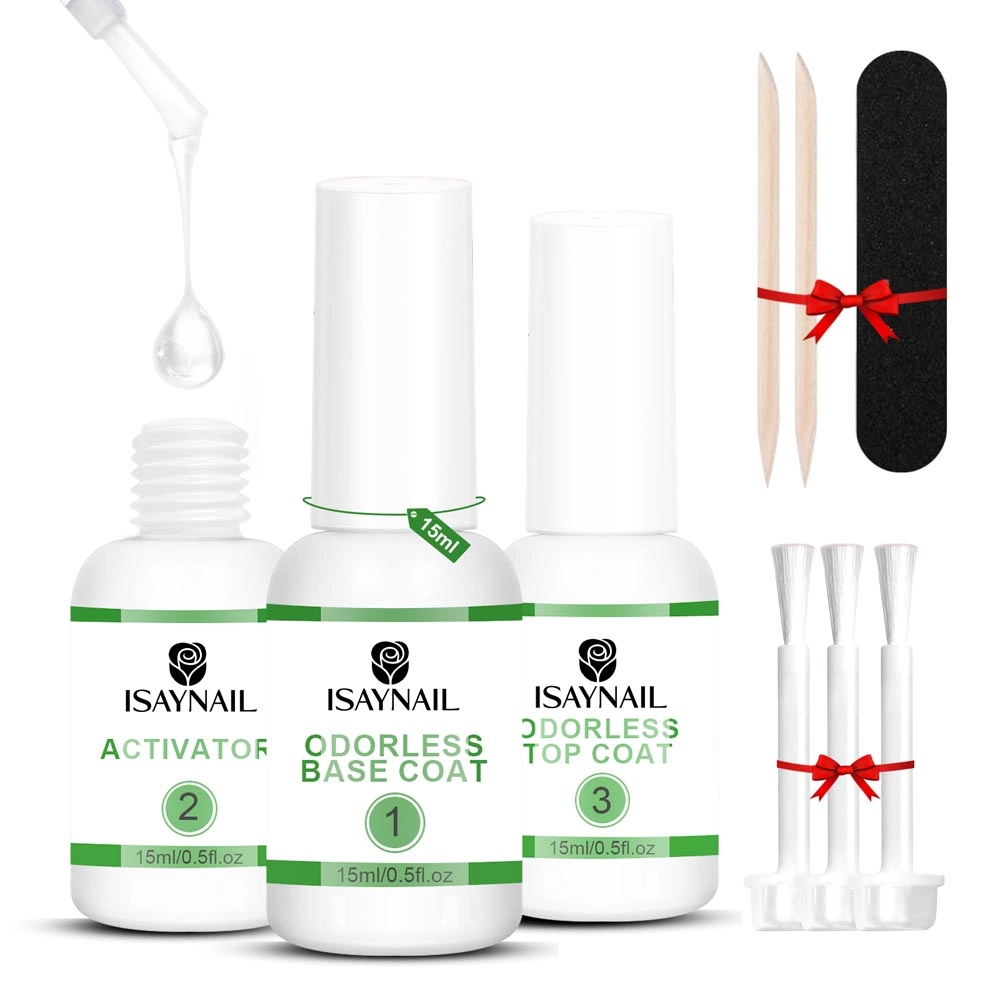
Essential Dip Powder Liquid Set 15ml Top Coat and Base Coat Gel Polish Kit

Professional Nail Supplier High Pigment Sparkly Shiny Laser Glitter Top Coat Gel
ISAYNAIL presents our High Quality Laser Rainbow Top Coat Gel Polish. Achieve a dazzling, colorful, and shiny glitter finish that mesmerizes. This long-lasting Laser Rainbow Top Coat elevates any manicure into a brilliant, eye-catching work of art. Experience the sparkle!

Clear Color 10ml Soak Off UV Lamp Top Base Coat Gel Polish Set

High Quality Soak Off UV LED Base Coat and Top Coat Gel Polish Set
Contact Us
We are committed to producing the best quality products at the most competitive prices.Therefore, we sincerely invite all interested companies to contact us for more information.
* Rest assured that your privacy is important to us, and all information provided will be handled with the utmost confidentiality.
Copyright © 2025 ISAYNAIL All Rights Reserved.
Isaynail
2in1_acrylic_powder.factory