

Regulatory Compliance for Acrylic Nail Powder Suppliers
- Regulatory Compliance for Acrylic Nail Powder Suppliers
- Introduction: why compliance matters for acrylic nail powder suppliers
- Product snapshot: ISAYNAIL Aurora Dip Powder
- 1. Core regulatory concepts every acrylic nail powder supplier must know
- 2. Mandatory safety assessment and documentation
- 3. Banned and restricted substances: what to avoid in acrylic powders
- 4. Testing: stability, microbiological, and chemical analyses
- 5. Labeling, ingredient declaration, and claims
- 6. Good Manufacturing Practices and quality systems
- Practical GMP actions for suppliers
- 7. Region-by-region compliance checklist (comparison table)
- 8. Import/export and customs considerations for suppliers
- 9. Practical supply-chain requirements: raw materials, CoAs, and audits
- 10. Label templates and documentation pack for buyers
- 11. Marketing claims and substantiation for commercial success
- 12. Handling allergy and safety incident reports
- 13. Brand positioning and supplier advantages: ISAYNAIL example
- 14. Cost-effective compliance strategies for small suppliers
- FAQ — Frequently Asked Questions
- Q: Is methyl methacrylate (MMA) allowed in acrylic nail powders?
- Q: Do I need a Safety Data Sheet (SDS) for acrylic nail powder?
- Q: Does the FDA approve acrylic nail powders before sale in the US?
- Q: What is the Responsible Person for EU cosmetics?
- Q: What documentation should I provide to a retailer buying private-label powder?
- Final call to action — contact and product information
- Authoritative sources and references
Regulatory Compliance for Acrylic Nail Powder Suppliers
Introduction: why compliance matters for acrylic nail powder suppliers
Suppliers of acrylic nail powder must navigate an evolving global regulatory landscape to keep products safe, marketable, and trusted by professionals and consumers. Non-compliance risks range from product recalls and fines to brand damage and customer harm. This guide focuses on practical, industry-proven steps suppliers should follow to ensure regulatory compliance for acrylic nail powder — including private label products like Private Label Colorful Acrylic Powder Fast Dry Shiny Glitter Aurora Dip Powder.
Product snapshot: ISAYNAIL Aurora Dip Powder
Below is the product description that encapsulates performance expectations suppliers and retailers must support with compliant documentation:
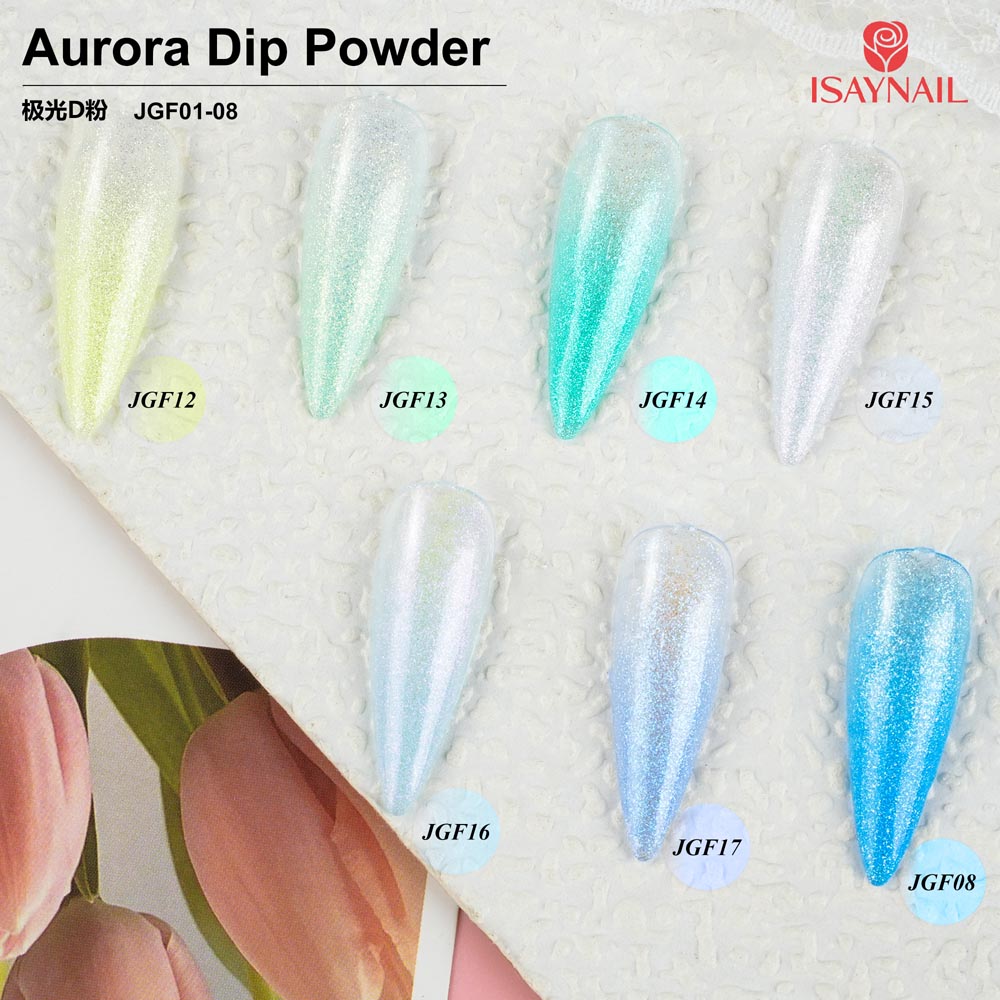
Experience ISAYNAIL's captivating Aurora Dip Powder. This Colorful Acrylic Powder delivers fast-dry, shiny glitter effects with a mesmerizing 'Aurora' finish. Achieve vibrant, multi-dimensional nails that sparkle beautifully. Easy to apply for stunning, long-lasting results.
1. Core regulatory concepts every acrylic nail powder supplier must know
To operate legally and responsibly, suppliers should be familiar with several core concepts that repeat across jurisdictions: product safety assessment, prohibited/restricted substances, labeling and ingredient disclosure, Good Manufacturing Practices (GMP), product notification/registration, Safety Data Sheets (SDS) and stability/microbiological testing. These are commercial-intent concerns because buyers (distributors, salons, retailers) require full documentation before placing orders for acrylic nail powder or private label runs.
2. Mandatory safety assessment and documentation
Most markets require a formal cosmetic safety assessment before placing a cosmetic product on the market. In the EU, a Cosmetic Product Safety Report (CPSR) is mandatory under Regulation (EC) No 1223/2009. The CPSR documents formulation safety, toxicology data for each ingredient, exposure calculations, and a conclusion by a qualified safety assessor. Suppliers must maintain supporting data and make it available to authorities and responsible persons. Although the US FDA does not pre-approve cosmetics, US suppliers are still expected to perform safety assessments and keep records demonstrating product safety.
3. Banned and restricted substances: what to avoid in acrylic powders
Some monomers and impurities are explicitly prohibited or restricted in cosmetics. For example, methyl methacrylate (MMA) has a history of severe adverse reactions and is banned for direct nail application in many professional markets; suppliers must avoid MMA and closely related unsafe ingredients. Heavy metals (lead, cadmium, mercury) must be controlled and usually limited to trace impurity levels. Suppliers should implement raw-material specifications and testing to confirm the absence of banned substances and compliance with limits set by regional authorities.
4. Testing: stability, microbiological, and chemical analyses
Robust testing is the backbone of compliance for any acrylic nail powder product. Key tests include:
- Stability testing (physical and chemical) to confirm shelf-life and performance claims like fast dry and long-lasting.
- Microbiological testing (total viable count, pathogens) — even powders require controls to prevent contamination during production and packaging.
- Chemical analysis for prohibited substances, heavy metals, volatile impurities and residual monomers.
- Patch-test/skin-compatibility data for professional and consumer safety claims.
Documented test reports must be retained and provided to customers and regulators as required.
5. Labeling, ingredient declaration, and claims
Labeling is both regulatory and commercial: clear, compliant labels build customer trust and reduce legal risk. Typical labeling requirements include full ingredient listing (INCI names in many jurisdictions), country of origin, batch/lot number, manufacturer/distributor contact details, net weight, and any warning statements (e.g., For professional use only if applicable). Marketing claims such as hypoallergenic or non-toxic must be substantiated. For the product name Private Label Colorful Acrylic Powder Fast Dry Shiny Glitter Aurora Dip Powder, ensure that any performance claims (fast dry, shiny) are validated by testing.
6. Good Manufacturing Practices and quality systems
Adherence to Good Manufacturing Practices (GMP) assures consistent product quality. ISO 22716 (Cosmetics — Good Manufacturing Practices) is widely recognized and describes production, quality control, storage, and distribution best practices. Implementing quality management systems (e.g., ISO 9001) and batch traceability is essential for private label production and supplier audits by retailers.
Practical GMP actions for suppliers
- Written procedures for raw material acceptance and testing.
- Controlled environment for blending and filling to minimize contamination.
- Batch records, deviation logs, and corrective action systems.
7. Region-by-region compliance checklist (comparison table)
The following table summarizes major compliance elements across key markets for acrylic nail powder suppliers:
| Requirement | European Union | United States | United Kingdom | Canada / Australia |
|---|---|---|---|---|
| Primary regulation | Regulation (EC) No 1223/2009 (Cosmetics) | FDA Cosmetics Act (no pre-approval); FD&C Act applies to adulterated/misbranded | UK Cosmetics Regulation (enforced post-Brexit) | Health Canada (Cosmetics Program) / Australian NICNAS / AICIS |
| Safety assessment | CPSR mandatory; CPNP notification required | Safety assessment expected; no pre-market approval | CPSR-equivalent; UK Responsible Person and notification | Safety data and ingredient control required |
| Restricted/banned substances | Blacklists and Annexes; specific banned substances | No centralized blacklist; state laws (e.g., CA Prop 65) may apply | Similar to EU lists post-Brexit | Local restrictions; check AICIS/Health Canada lists |
| Product notification | CPNP (Cosmetic Product Notification Portal) | Voluntary, FDA VCRP (Voluntary Cosmetic Registration Program) | UK notification system | Local notification or records may be required |
| GMP expectations | ISO 22716 recommended/expected | GMP advised; industry standards followed | ISO 22716 expected | GMP recommended |
8. Import/export and customs considerations for suppliers
Suppliers selling acrylic nail powder internationally must prepare customs documentation, harmonized tariff codes, certificates of analysis (CoA), SDS, and evidence of regulatory compliance for the destination market (e.g., CPNP notification number for EU imports). For private label arrangements, agreements should clarify who serves as the 'Responsible Person' for regulatory filings in the target market.
9. Practical supply-chain requirements: raw materials, CoAs, and audits
Traceability begins with raw materials. Require Certificates of Analysis for pigments, monomers, and fillers. Implement supplier qualification audits, periodic lot testing, and change-control policies so that any material or supplier change triggers risk assessment and re-validation. Many buyers will require supplier audit reports and up-to-date documentation before awarding private label contracts for products such as Private Label Colorful Acrylic Powder Fast Dry Shiny Glitter Aurora Dip Powder.
10. Label templates and documentation pack for buyers
Create a standard documentation pack for each SKU to streamline sales and compliance checks. A recommended pack for each acrylic nail powder product includes:
- Full INCI ingredient list
- Product label artwork and language-specific labels
- Safety Data Sheet (SDS)
- Stability and microbiological test reports
- Certificate of Analysis (CoA) for the batch
- GMP statement and ISO 22716 compliance evidence
- CPSR or safety assessment summary
11. Marketing claims and substantiation for commercial success
Commercial buyers will pay more for verifiable claims. If the product name includes descriptive terms — for example, Fast Dry or Shiny Glitter in Private Label Colorful Acrylic Powder Fast Dry Shiny Glitter Aurora Dip Powder — ensure you can document the performance via controlled testing. Claims such as long-lasting, chip-resistant, or vegan should be backed by objective evidence or supplier declarations for ingredients.
12. Handling allergy and safety incident reports
Establish a post-market surveillance process to collect and investigate adverse event reports. Promptly report serious incidents to the competent authority where required, retain records, and implement corrective actions (recalls, label changes, reformulation) if necessary. Transparent handling of safety incidents protects both consumers and brand reputation.
13. Brand positioning and supplier advantages: ISAYNAIL example
For brands like ISAYNAIL, combining aesthetic performance with compliance is a market differentiator. Advantages to emphasize when marketing Private Label Colorful Acrylic Powder Fast Dry Shiny Glitter Aurora Dip Powder:
- Validated performance: fast-dry and shiny finish supported by stability/performance testing.
- High-quality pigments and glitter with CoAs confirming low impurity and heavy-metal content.
- GMP-based production and batch traceability for private label partners.
- Full documentation pack available to expedite retail or professional distribution approvals.
14. Cost-effective compliance strategies for small suppliers
Compliance need not be prohibitively expensive. Small suppliers can prioritize: (1) a single qualified safety assessor to produce CPSRs, (2) third-party accredited labs for essential testing (stability, heavy metals, microbiology), (3) standardized label templates, and (4) a concise documentation pack to provide to buyers. Group testing (panel testing across multiple SKUs) and leveraging accredited contract manufacturers can reduce per-unit compliance costs.
FAQ — Frequently Asked Questions
Q: Is methyl methacrylate (MMA) allowed in acrylic nail powders?
A: MMA has been widely restricted or banned for direct nail application in many jurisdictions due to severe adverse reactions. Suppliers should avoid MMA in formulations and verify raw-material specifications. Use safer, approved acrylates and document the absence of banned monomers.
Q: Do I need a Safety Data Sheet (SDS) for acrylic nail powder?
A: Yes. An SDS is required for hazardous substances or mixtures and is commonly provided for cosmetic powders to meet workplace safety and transport requirements. The SDS is essential for shipping and for professional users.
Q: Does the FDA approve acrylic nail powders before sale in the US?
A: No, the FDA does not pre-approve cosmetics. However, cosmetics must not be adulterated or misbranded. Suppliers should perform safety assessments, maintain documentation, and comply with labeling and state-specific laws (e.g., California's consumer product regulations).
Q: What is the Responsible Person for EU cosmetics?
A: Under EU regulations, the Responsible Person is the entity legally responsible for ensuring a cosmetic product meets regulatory requirements (CPSR, CPNP notification, labeling). For imports, suppliers can appoint a Responsible Person in the EU.
Q: What documentation should I provide to a retailer buying private-label powder?
A: Provide the documentation pack (INCI list, SDS, CoA, stability/microbiological test reports, CPSR or safety assessment, GMP evidence, product labels) and any marketing-claim substantiation.
Final call to action — contact and product information
If you need compliant, eye-catching products ready for private label or retail, discover Private Label Colorful Acrylic Powder Fast Dry Shiny Glitter Aurora Dip Powder with full compliance documentation. Contact our compliance team to request a documentation pack, CoA, SDS, or to discuss private-label formulations and minimum order quantities.
Contact us: — Request product samples and compliance documentation today.
Authoritative sources and references
Key authoritative resources used for regulatory expectations and best practices:
- European Commission — Regulation (EC) No 1223/2009 on cosmetic products: https://eur-lex.europa.eu/eli/reg/2009/1223/oj
- European Commission — Cosmetic Product Notification Portal (CPNP): https://ec.europa.eu/growth/sectors/cosmetics/cpnp_en
- US Food and Drug Administration (FDA) — Cosmetics: https://www.fda.gov/cosmetics
- REACH and ECHA — Understanding REACH: https://echa.europa.eu/regulations/reach/understanding-reach
- ISO 22716 — Cosmetics — Good Manufacturing Practices (overview): https://www.iso.org/standard/36437.
- California Office of Environmental Health Hazard Assessment — Proposition 65: https://oehha.ca.gov/proposition-65
- International Labour Organization / GHS — Classification and labelling: https://unece.org/ghs-rev-7-english
For assistance preparing a compliance documentation pack or to discuss private label production for Aurora Dip Powder, contact our sales and compliance team.
ISAYNAIL best professional best way to apply nail tips Manufacturers and supplier brand
Top Nail Tips for Perfect Manicure | ISAYNAIL
Are Wholesale Dip Powders Right for New Technicians?
Tips for buy base coat vs top coat
FAQ
What about your payment terms ?
TT, PayPal, Alibaba pay
What is your main products ?
Our main products are our dip powder, acrylic powder, and UV gel polish.
Where is your location ?
We are in the south of China, in Guangzhou City, which is near Hong Kong.
How soon can I get a price quote?
For most projects, once we know the parking box type, printing requirements and quantity, we can provide you with a price quote within 1 hour.
What is your order lead time ?
Samples order are within 3 days, production order will be 7-10 days, if special packing is needed, it will be around 15-20 days
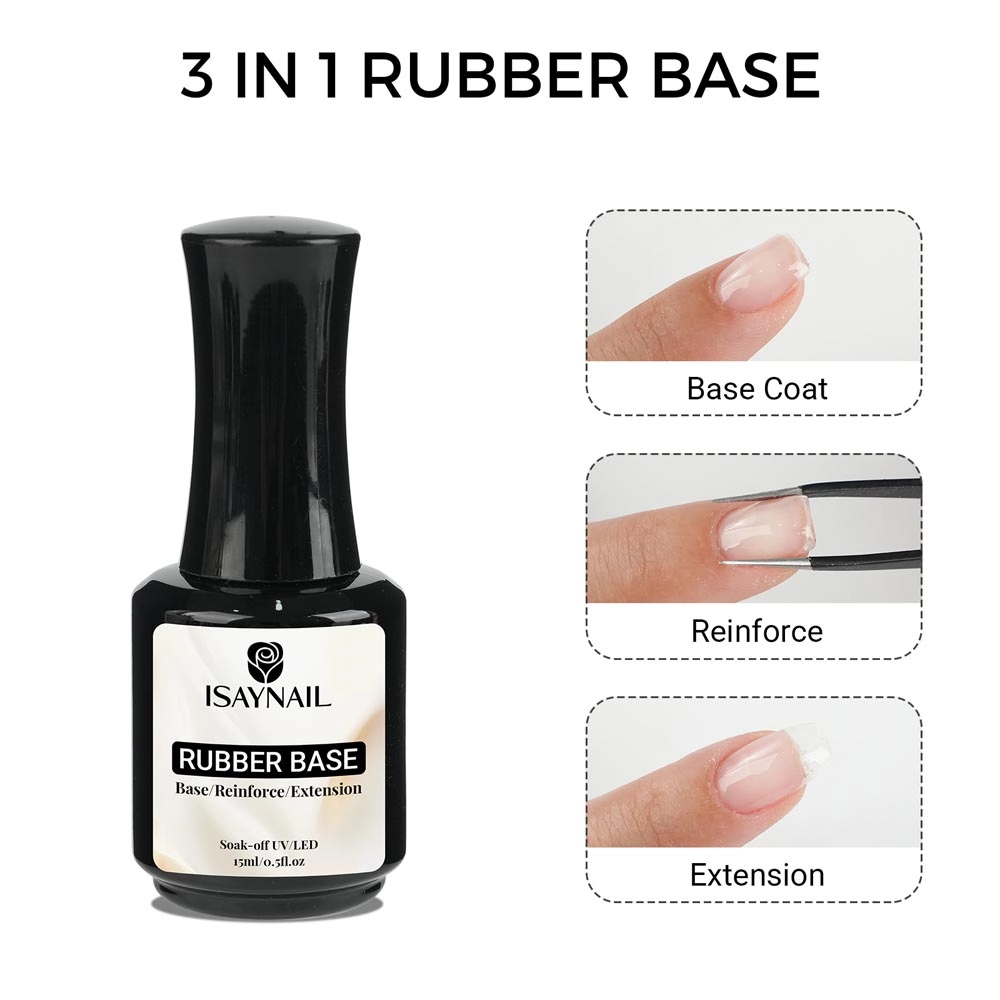
3 in 1 Rubber Base Gel Polish Professional Nail Extension Gel
ISAYNAIL's 3 in 1 Rubber Base Gel Polish is your professional solution. This advanced formula functions as a base, strengthener, and extension gel, perfect for durable, flexible nail enhancements. Achieve salon-quality results effortlessly.
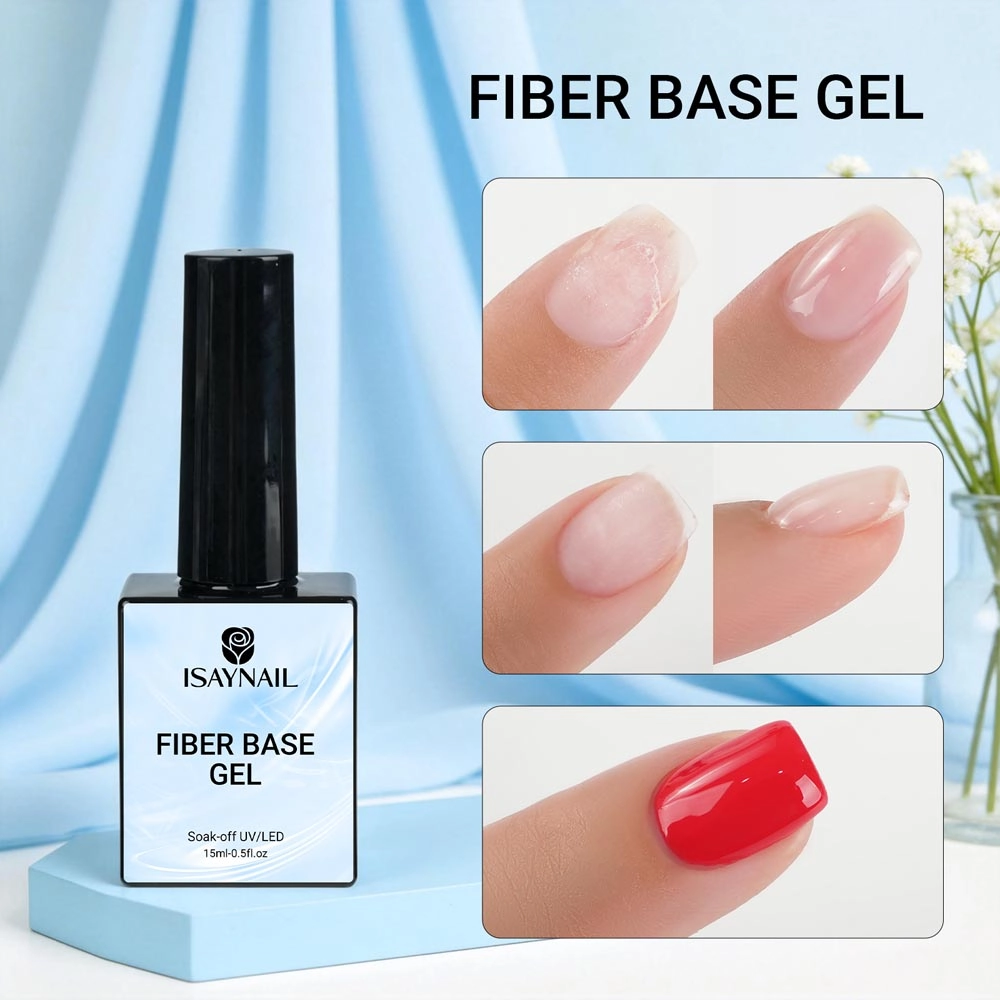
Healthy Fiber Base Gel Long Lasting UV Repair Nail Gel Polish
Fiber Base Gel – a gel polish base coat with reinforcing synthetic fibers. Fiber Base Gel – a gel polish base coat with reinforcing synthetic fibers.
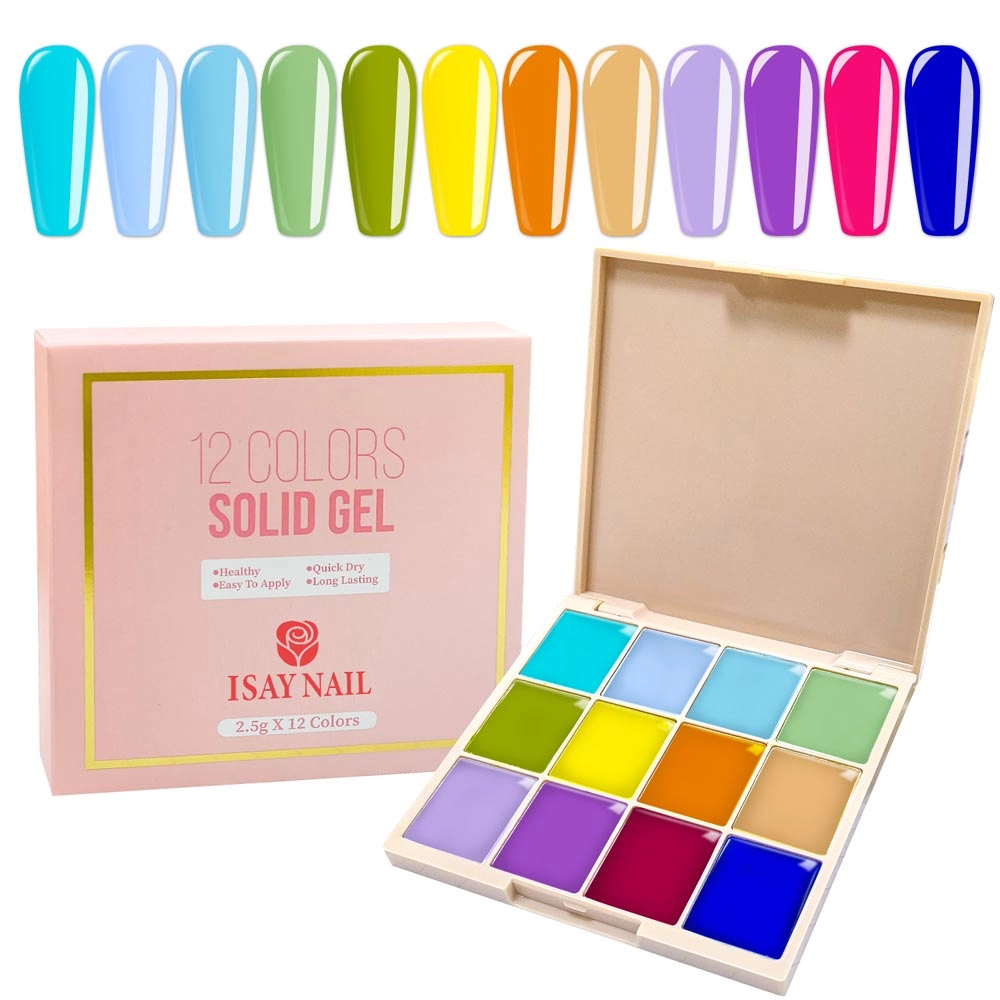
Custom Logo Candy Color Gel Set 12 Colors DIY Solid Gel Kit
This 12 Colors DIY Solid Gel Kit offers vibrant, candy-colored hues for stunning, long-lasting nail art. Get your High Quality 12 Colors Solid Gel Set today and craft unique designs!
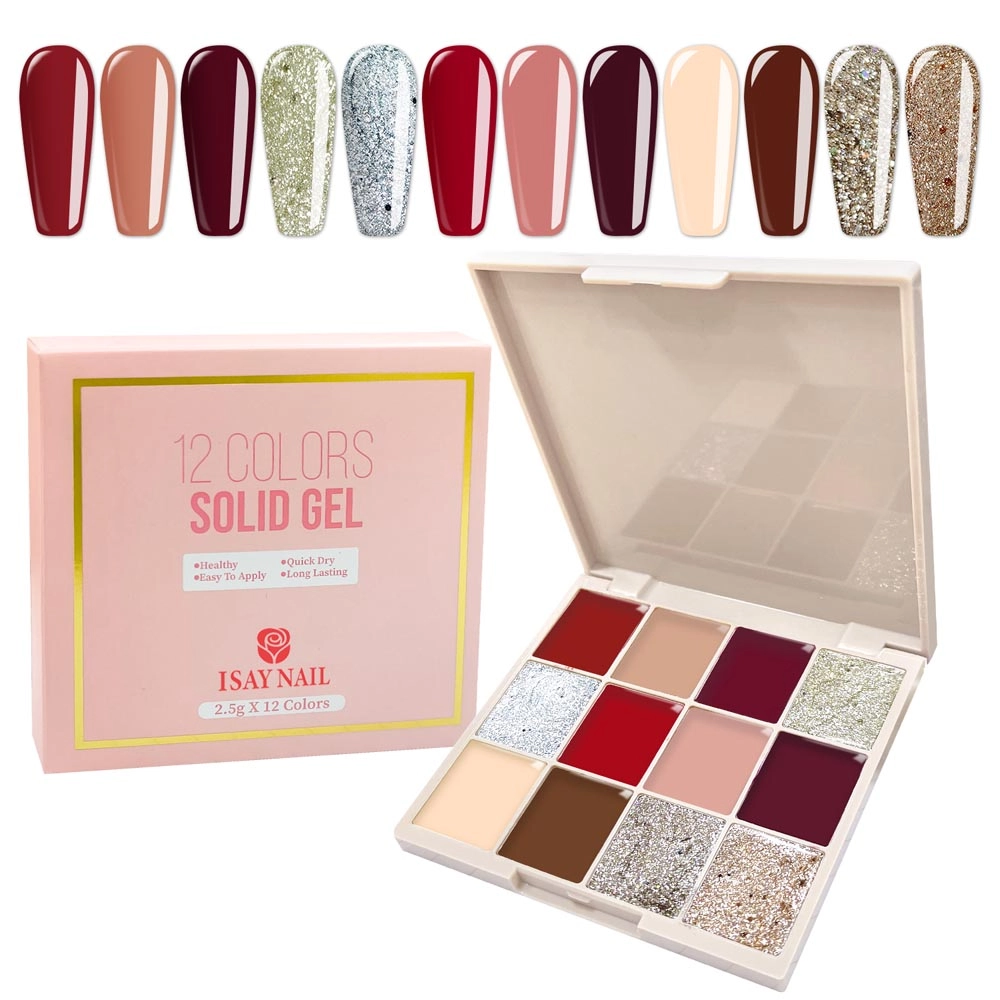
12 Colors Solid Gel Kit Professional DIY Manicure Nail Gel Polish Set
Elevate your nail art with the ISAYNAIL 12 Colors Solid Gel Kit. This professional DIY manicure nail gel polish set offers a stunning palette for endless creativity. Experience salon-quality results at home with our High Quality 12 Colors Solid Gel Set. Perfect for captivating, long-lasting looks.


Copyright © 2025 ISAYNAIL All Rights Reserved.